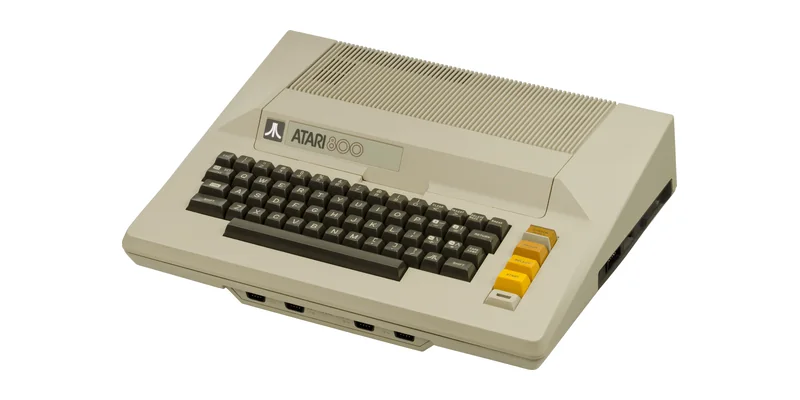
400/800
Atari 400 & 800
Custom graphics and sound chips made these first machines astonishingly capable.
Meet the originals →1979 → Today / Eight bits & beyond
A personal archive devoted to Atari's home computers—the machines, languages, operating systems, games, upgrades, and memories that turned curiosity into a lifelong hobby.
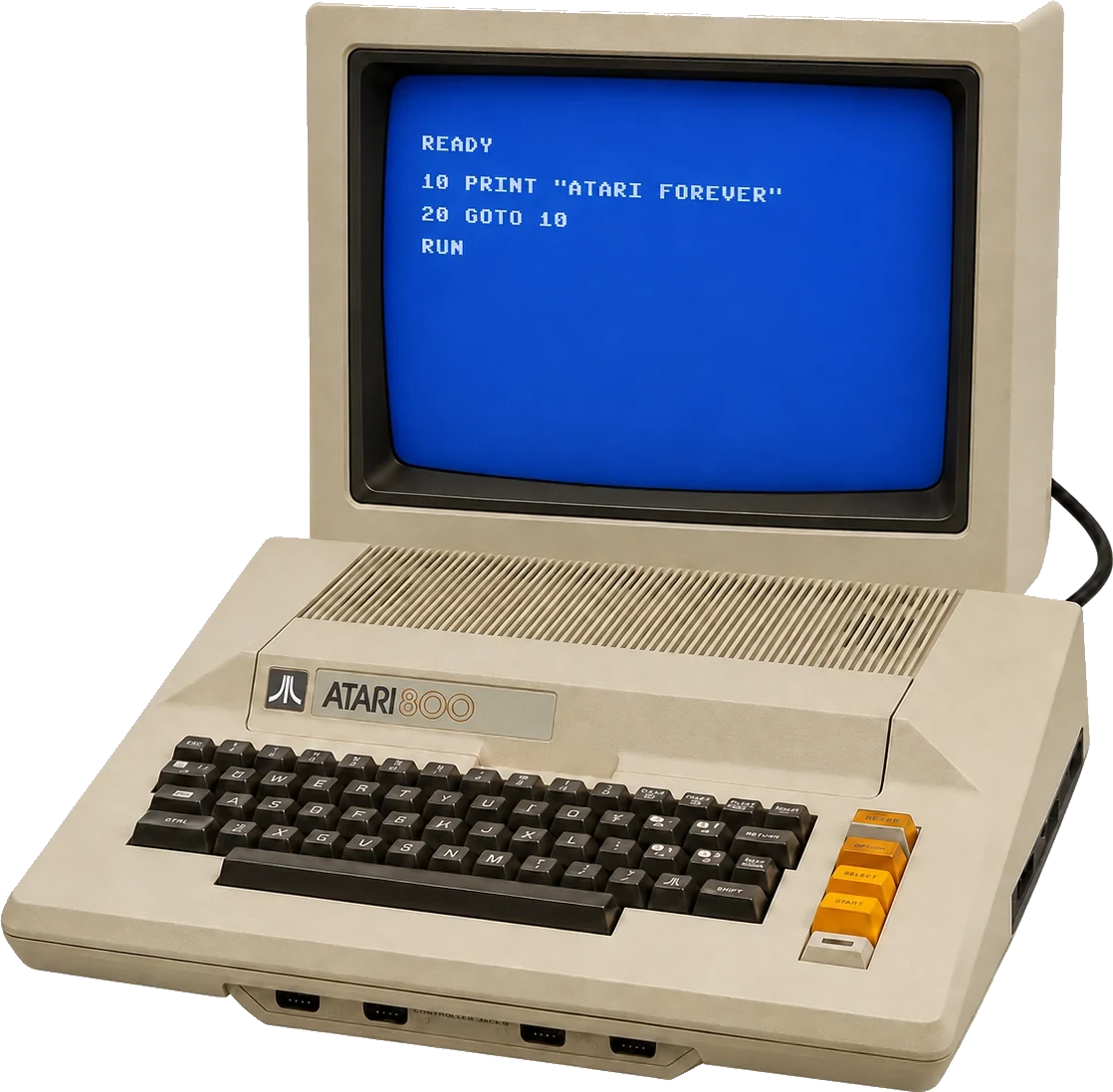
The lineup
From the tank-like Atari 800 to the sixteen-bit ST, each generation invited its owner to open a manual, type a program, and discover what a computer could do.
Custom graphics and sound chips made these first machines astonishingly capable.
Meet the originals →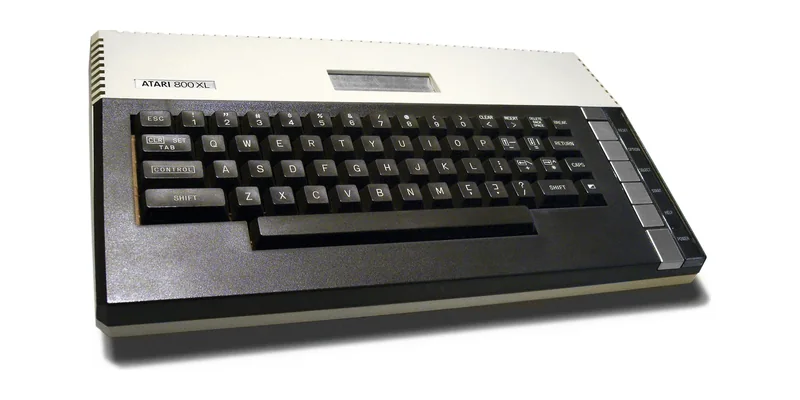
A sleeker case, built-in BASIC, and broad compatibility defined the XL era.
Enter the XL era →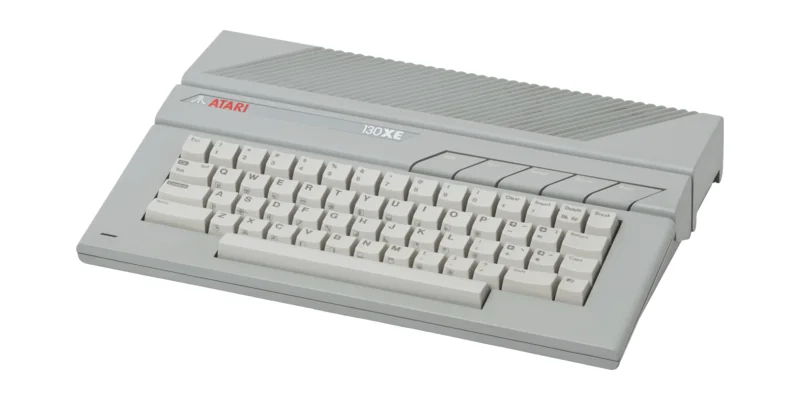
The final major eight-bit redesign, with the 130XE doubling memory to 128K.
Explore the XE line →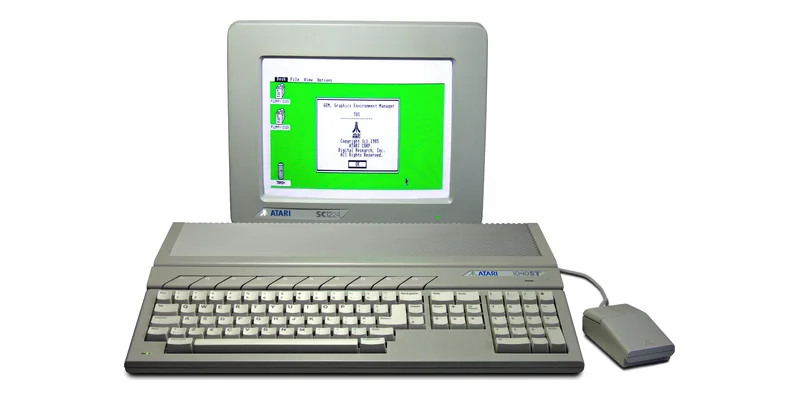
A graphical desktop, Motorola 68000 power, and built-in MIDI changed the scale of creation.
Discover the ST →A quick chronology
A compact timeline of the machines covered by this archive. Visit the history section for the people, technology, and market shifts behind them.
The custom ANTIC, CTIA, and POKEY chips bring sophisticated color, player/missile graphics, scrolling, and four-channel sound into the home.
The compact 600XL and full-size 800XL introduce a sharper industrial design and built-in Atari BASIC.
Atari carries its eight-bit line forward while the 520ST opens a new world of 16/32-bit computing and graphical software.
Modern storage, video adapters, emulators, new games, and preservation work keep these systems useful and surprising.
Inside the archive
This site connects the hardware with what people actually did with it:
Compare BASIC, Action!, assembly language, Logo, C, and other ways people taught Atari computers new tricks.
Programming →Follow the path from Atari OS (where it's implementation of CIO separated it from the rest), the various disk operating systems layered on top, and the move to 16 bit and the GEM desktop and TOS.
Operating systems →What made them special and why they still deserve a turn.
Favorite games →