My Atari History
The spark
Started With a Blinking Cursor
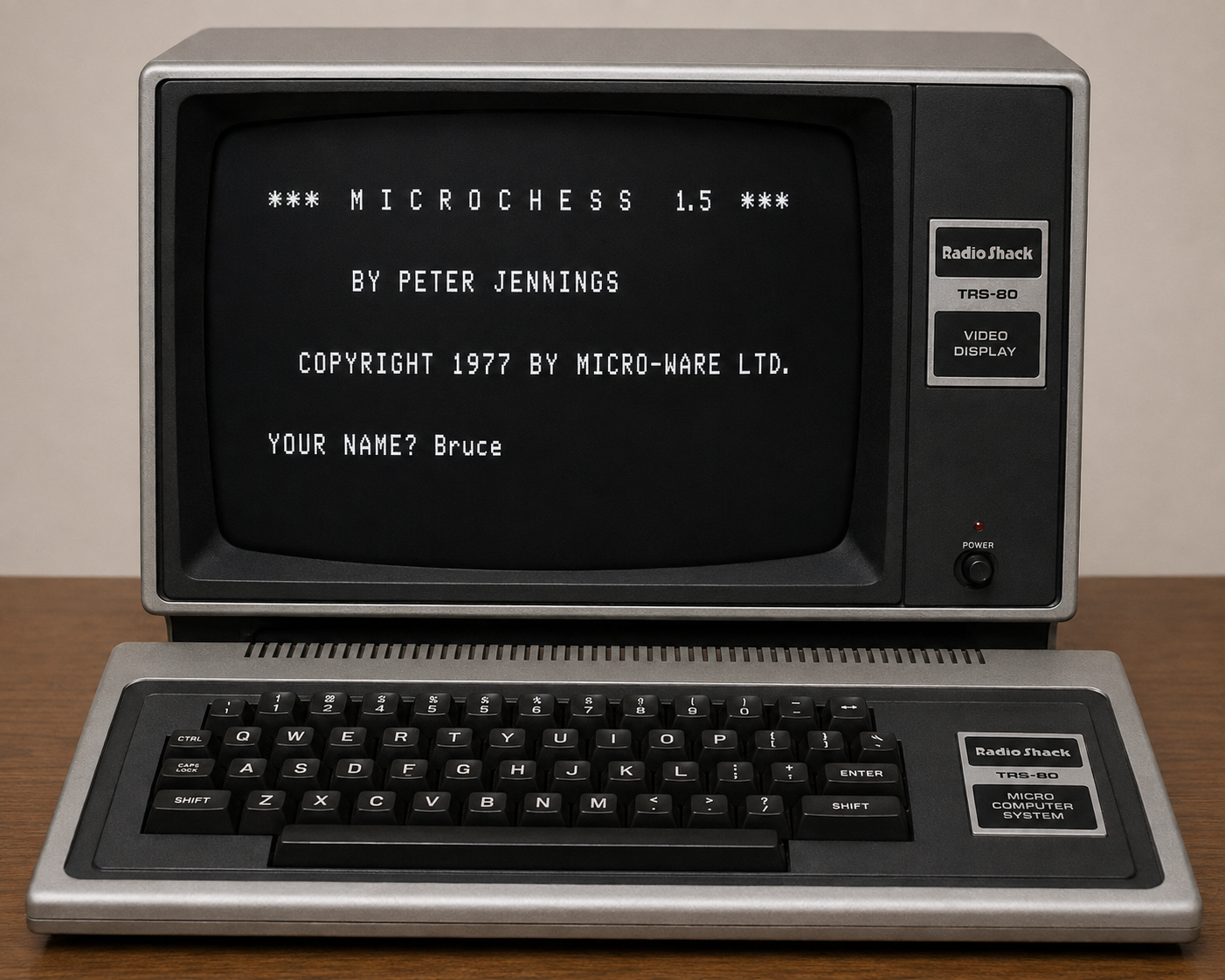
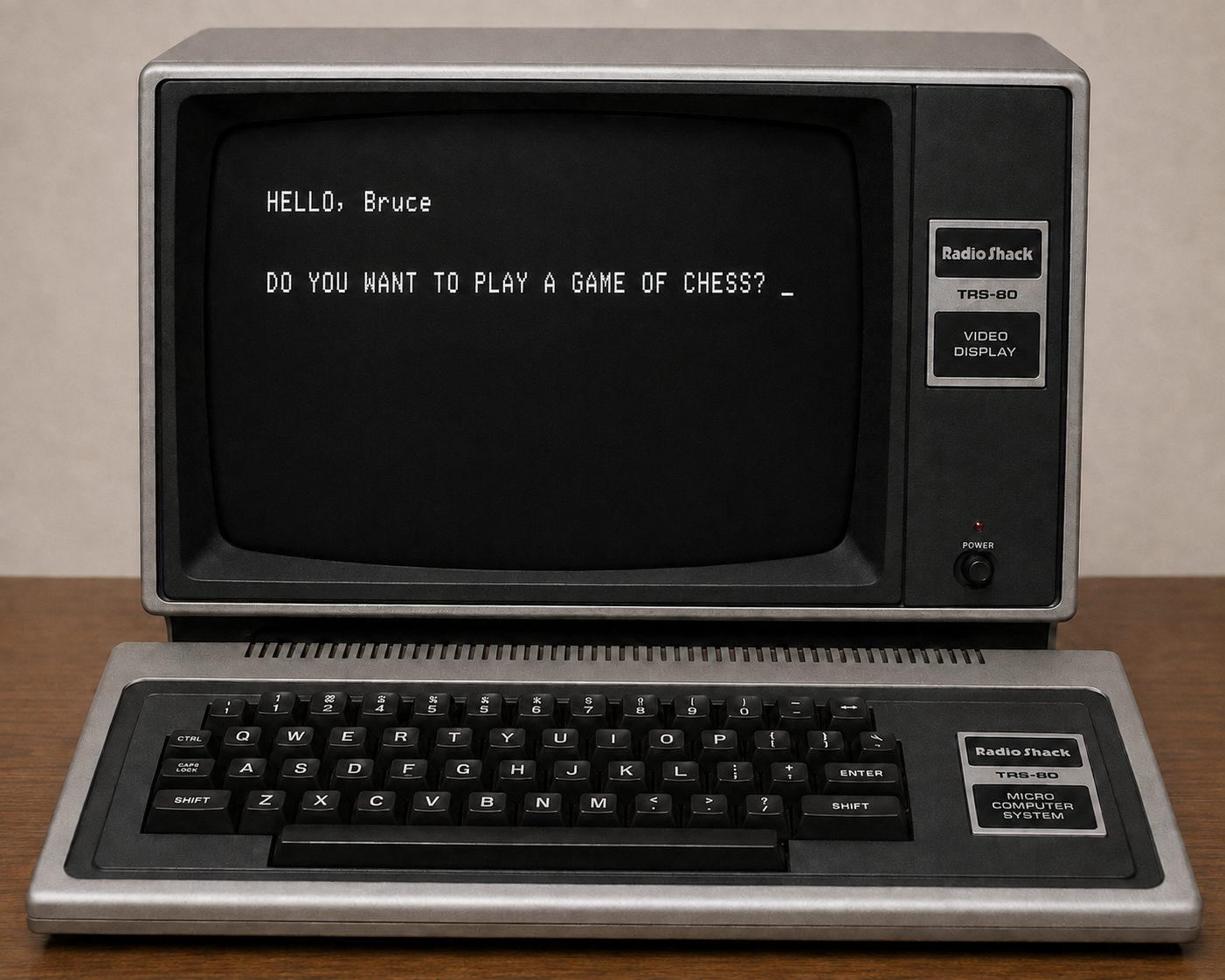
One night in 1977 I walked into a Radio Shack and saw a TRS-80 running MicroChess 1.5 by Peter Jennings. The first screen asked “YOUR NAME?” and I entered “Bruce.” The next screen greeted me with “HELLO, Bruce” and asked “DO YOU WANT TO PLAY A GAME OF CHESS?” with a blinking cursor. I proceeded to play a game of chess. It made me curious and sparked a desire to learn how it worked.
The Atari 2600
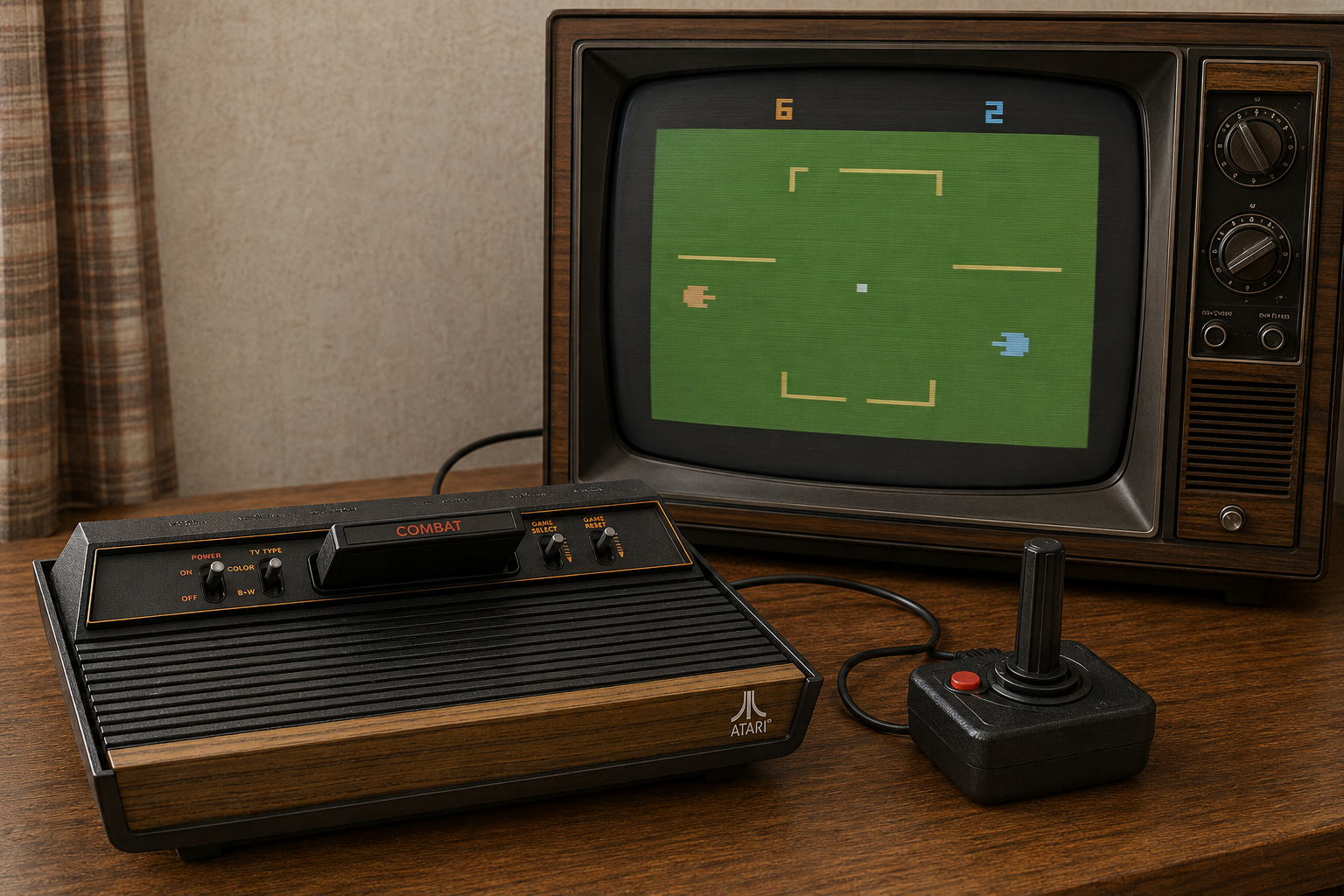
I first saw the Atari 2600 at Sears in 1977. I already owned a dedicated Pong game and was fascinated by how it worked. When I realized that swapping cartridges on the Atari 2600 let you play different games, I became even more curious. I had already been introduced to programming and computers by a friend of my cousin. He was a programmer for an insurance company in the 1970s. I was 22 and had been out of the Navy for about a year. I had served as a construction mechanic in the Seabees and was now working as a civilian mechanic. This sealed my desire to want to learn how to program.
I spent the next two months deciding whether to take the leap and visited an Air Force recruiter. I learned that I could join the Air Force without going through boot camp again, start out as a mechanic, and apply for training in computer programming. First, I had to take an aptitude test. I scored very well on it. I was able to join in late November 1977. It took two years for me to get approved to cross-train. Those two years weren't wasted: we got to live in San Bernardino, California, enjoy the local racing scene, and ride motorcycles in the mountains.
I started school in January 1980. My typing lessons from high school paid off and I was able to learn quite a bit by finishing my projects quickly and then helping others. Helping others debug their programs really deepened my understanding and helped me grasp new concepts more quickly. I had excellent instructors. I ended up getting stationed at Strategic Air Command headquarters at Offutt Air Force Base near Omaha, Nebraska. I was extremely fortunate to end up with a small team of programmers working on 3D software for cruise missile and B-52 mission planning.
The Atari 800
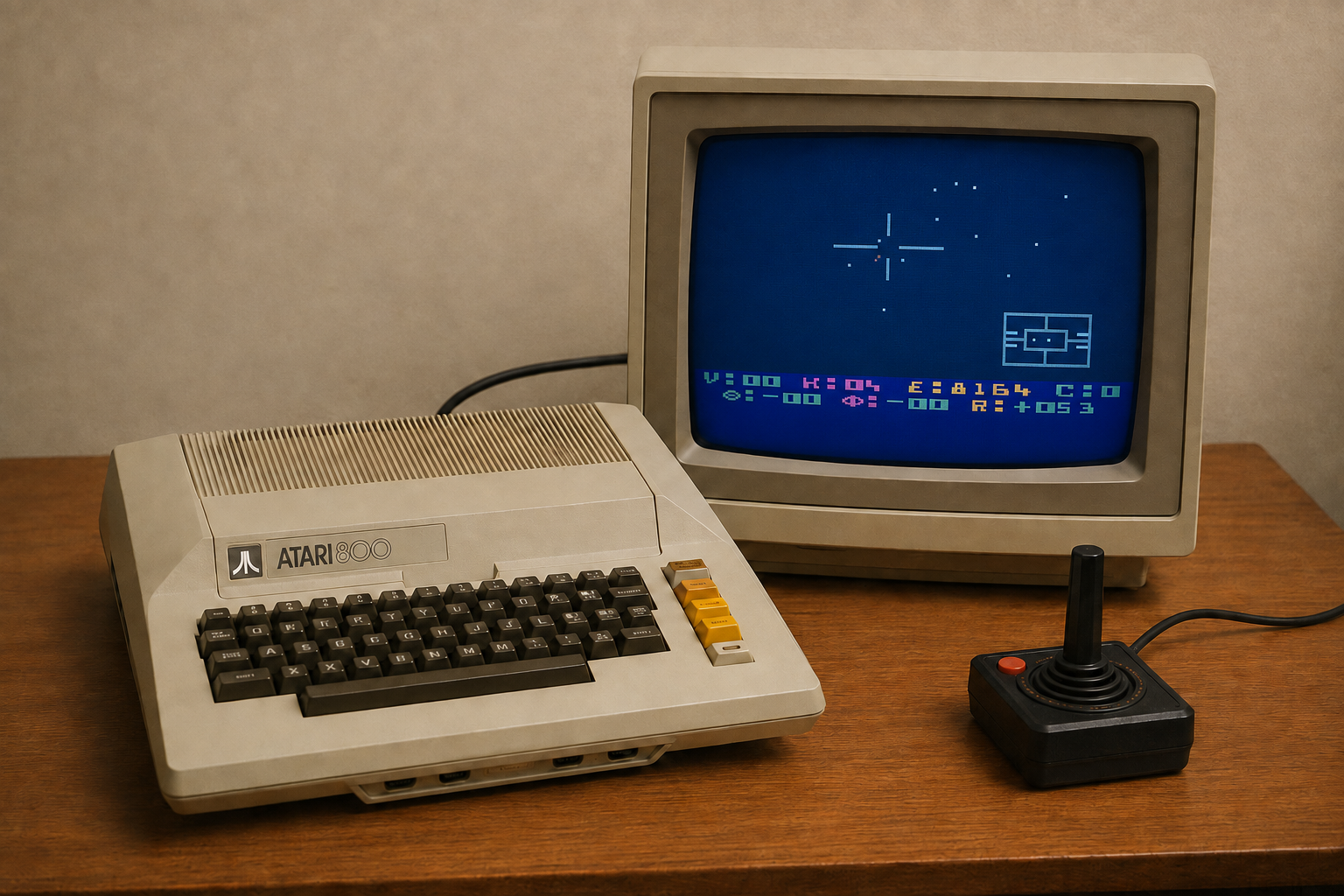
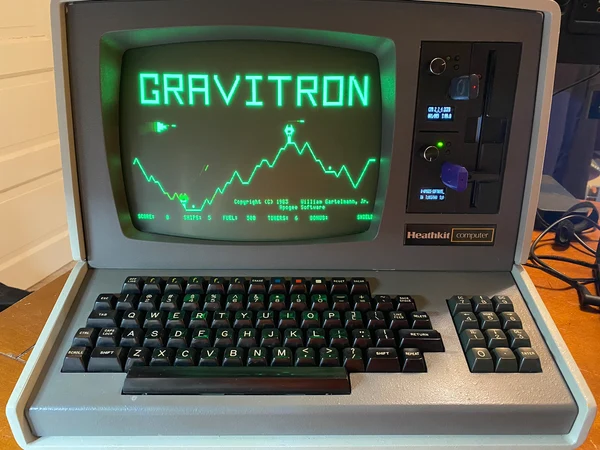
I first read about the Atari 800 in January 1980. It was just a short news item with a picture and a brief description. I liked how it looked and the prices being discussed, but it was still too expensive for me. I completed my training in March of 1980 and we moved to Nebraska. I learned 3D programming on Adage 3D terminals, along with IBM mainframe programming. I write more about that work on my GASCAP page. Around this time I was trying to decide what computer to get. It was possible to purchase an Apple II or build a Heathkit computer. I started working toward getting the Heathkit. There was actually a VA-funded course you could take that would leave you with a completed Heathkit computer at the end.
In May or June of 1980, I read a Creative Computing article on the Atari 800 and the game Star Raiders. Read the Creative Computing article (PDF). The article convinced me that I wanted an Atari 800, so I started saving for one.
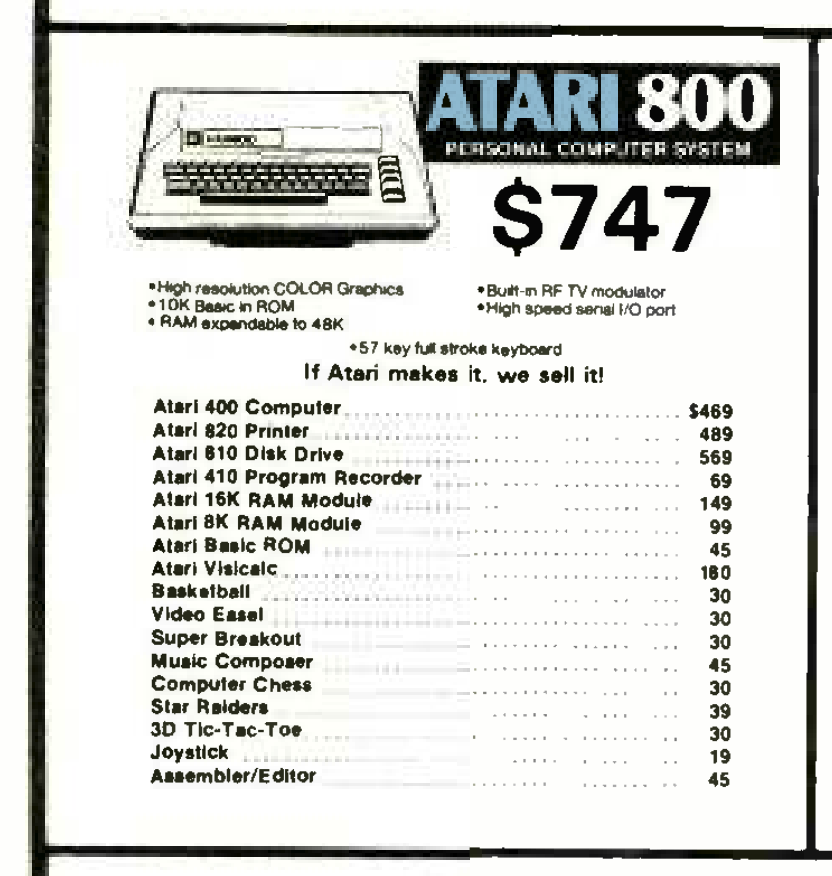
By the spring of 1981, Atari 800 prices had come down to $747. I found a deal at that price that included 24 KB of memory and a BASIC cartridge. I bought a cassette recorder and Star Raiders.
Learning to program it
I wrote an Othello game in BASIC with a simple computer opponent that could sometimes beat me. It also had a mode in which the computer played against itself. I wish I still had the source code, but the cassette or floppy disk it was stored on is long gone. I joined a local Atari user group with several active members, including Jeff Wacker, who created King Tut's Tomb. I learned a lot from the members, and I miss that kind of interaction. The highlight for me was when we went to the University of Nebraska at Lincoln and demonstrated our computers. At one point, we set up Star Raiders so we could project the game onto the planetarium dome.
Over the next four years I picked up C/65, the Atari Assembler cartridge, Mac/65, and Action!. Learning to program on the Atari helped me in my day job, including with systems-level programming on the IBM mainframe.
I was fortunate to have stumbled on a system like the Atari, with documentation about its hardware and a community willing to share techniques. That included people like Bill Wilkinson, who helped write the Atari Disk Operating System and the tools I used.
Going 16-bit
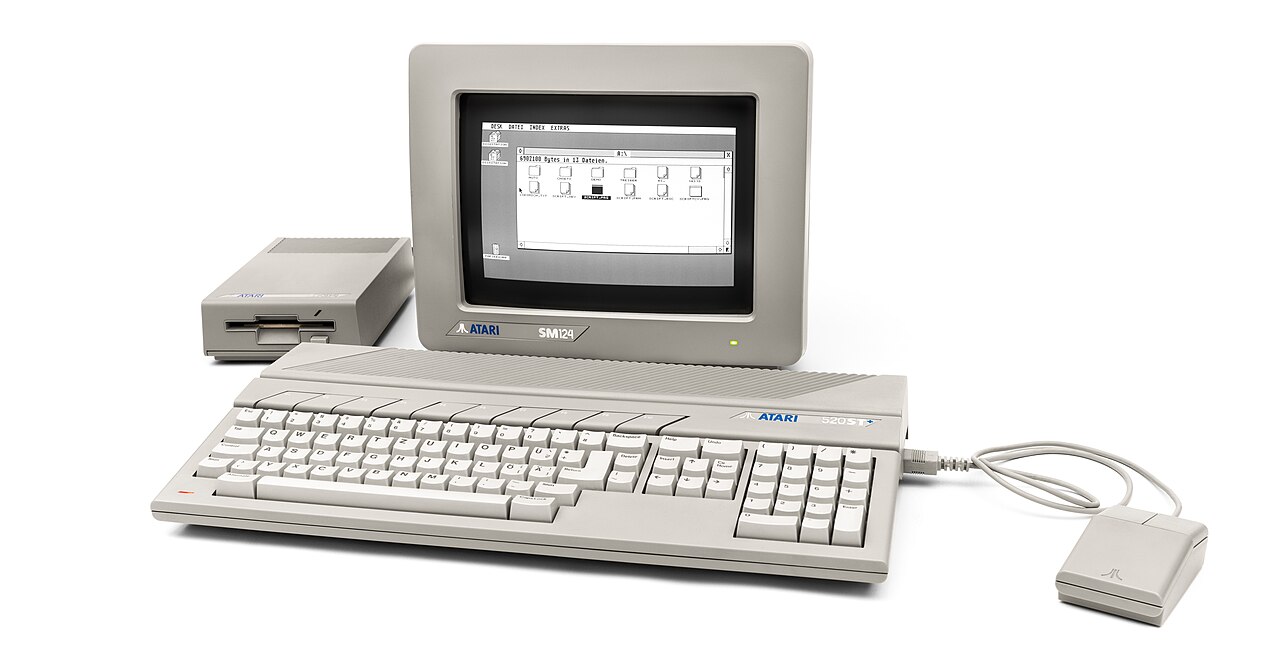

In 1986, I really wanted an Amiga, mainly because it felt like the successor to the Atari 8-bit computers—the machine I thought the 16-bit Atari should have been. I was able to get a deal on an Atari ST, so I bought that instead. I had to start with the monochrome monitor and save up for the color monitor.