Cooling
A lot of people don't realize that the powerplant is cooled by ocean water, and that water
travels through two 3 mile long tunnels. The tunnels were dug from the construction site
out to the ocean. They each are 19 ft in diameter. The intake tunnel is 17,140 ft long and
the discharge tunnel is 16,483 ft long. The intake and discharge vertical shafts were
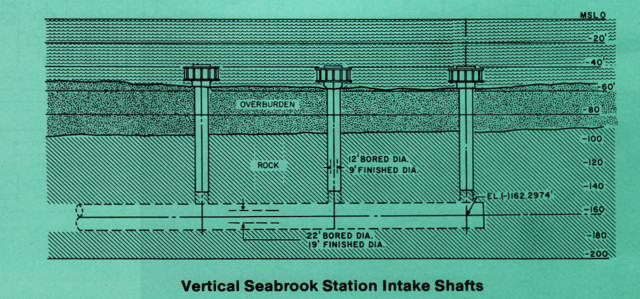
constructed before the tunnels. The first picture shows roughly how the tunnels are
situated. The water temperature increases about 34 degrees at the plant but by the time it
gets back to the ocean it is only 5 degrees warmer then the intake after exiting through
the diffuser nozzles.

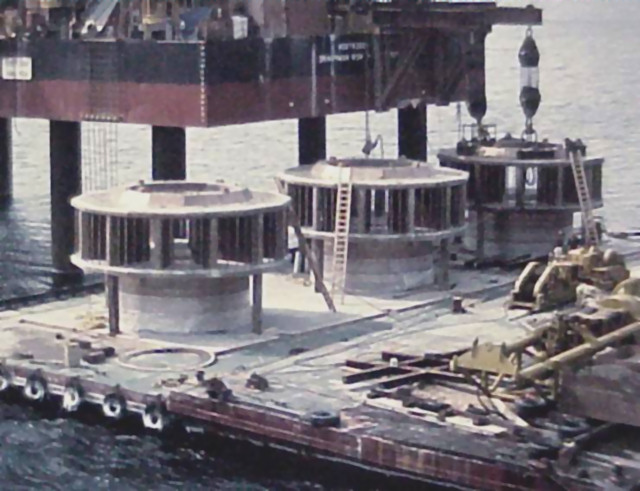
This picture shows the three intake shafts.
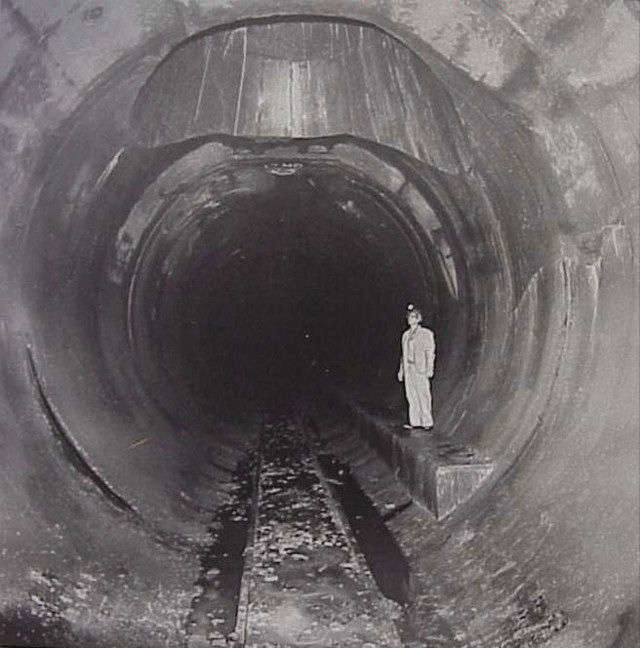
Three miles out and 160' below the water's surface. Out at the end of the Intake
Tunnel.
The three intake structures before they were lowered to the ocean floor.
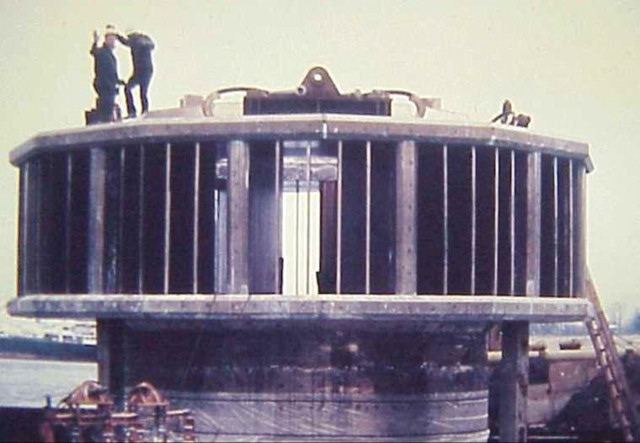
Two men on top of one intake structure. Good for seeing the size of the intake. After
Seabrook Station began operation seals would swim into the intake, down into the tunnel
and get lost. The width beween the bars is 16". The flow of the water is slow enough at
the intake not to suck in wild life, but it doesn't stop the curious.
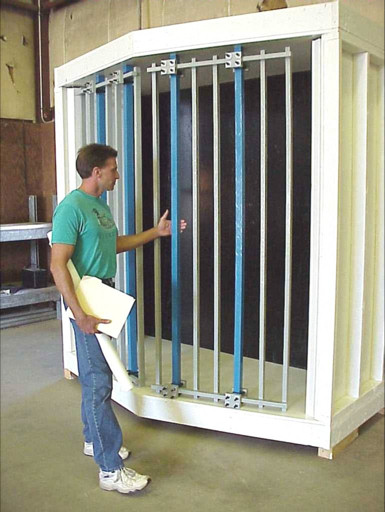
To keep the seals from swimming into the intake structures, seal deterrent barrier panels
were created. This is a mockup showing the panels bolted to the original (blue) bars. The
distance between the bars is 5". Since being installed in Aug, 1999 no seals have been
trapped in the tunnels.
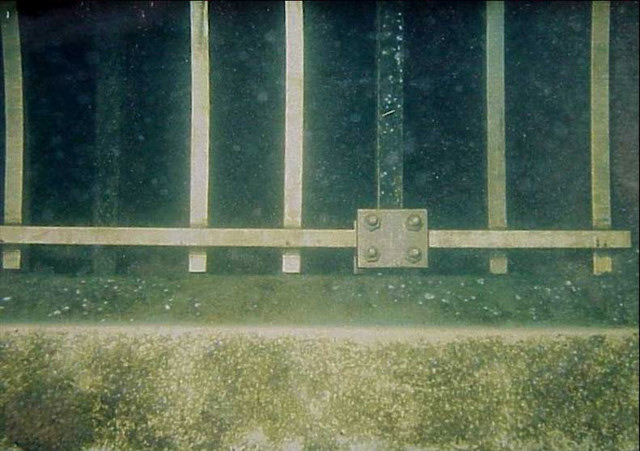
Closeup of a seal deterrent barrier panel installed. It's easy to see how much of a
difference 5" is than 16".
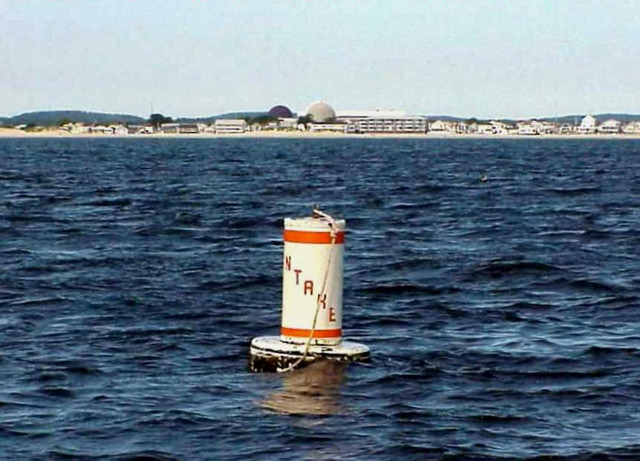
If were sitting on a boat, out at the buoy marking the intake structures, this is what it
would look like. You can see Unit 1 and Unit 2 containment buildings in the
distance.
The discharge diffuser nozzles are quite different than the intakes. Heated cooling water
is discharged out of eleven of these spaced about 100 ft apart. The openings of each
nozzle are about 2.5 ft in diameter. The diffuser nozzles jet the warmer water out at
about 10 feet per second at a point about 50 feet below the ocean surface. The surface
water temperature rise is limited to no more than 5 degrees fahrenheit above the ambient
ocean surface water temperature.